EPUB is designed to reflow, resizing text to fit whatever screen it is opened on, which makes it a poor fit for printing or for annotation apps that expect fixed pages. Filemorph renders an EPUB you already own into a paginated PDF, so it behaves like a normal document.
Filemorph renders the EPUB's chapters with WebKit, Apple's browser engine, reproducing text, images and basic formatting closely on fixed page sizes. Complex layouts, custom fonts and embedded stylesheets may differ slightly from how the ebook looks in a dedicated EPUB reader, so treat the result as a reading and annotation copy rather than a publisher-perfect reproduction.
How to convert EPUB to PDF on iPhone
Pro
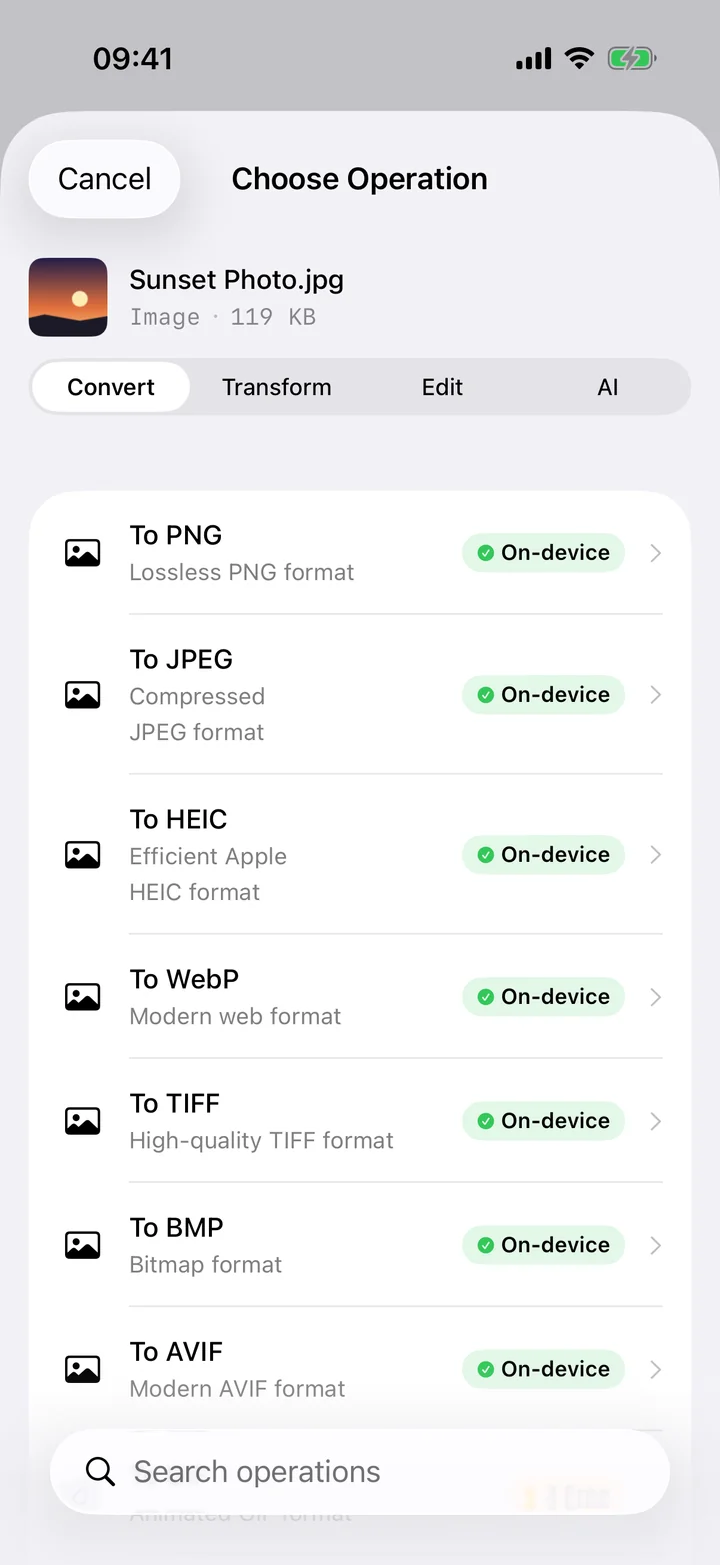
- Add your EPUB. Open Filemorph and pick the EPUB file from Files or the Share sheet.
- Choose PDF. Tap Convert and choose PDF as the output format.
- Save or share. Tap Convert. The paginated PDF saves locally, ready to print or annotate.
In the app: Convert → To PDF.
Why convert EPUB to PDF?
PDF gives an ebook fixed pages, which most annotation and printing tools expect and EPUB does not provide. Converting a book you own to PDF makes it easier to mark up, print a chapter, or read in an app that only handles PDF.
Is it private?
Yes. Unlike web converters that upload your files to a server, Filemorph converts every file locally using Apple's frameworks. Nothing leaves your device, and it works with no internet connection. This operation is part of Filemorph Pro ($29.99/year, 7-day free trial on monthly and annual plans).