Forwarding a live spreadsheet when you only want someone to read the numbers risks an accidental edit or a file that will not open on their device. Filemorph turns the sheet's data into a plain, readable PDF table instead — what you see is what they get, and it cannot be edited by mistake.
Filemorph reads the workbook's first sheet and lays its rows and columns out as a formatted table, with a bold header row, paginating automatically across as many pages as the data needs. It is a data render, not a visual clone of Excel: cell colors, conditional formatting, charts and images are not part of the output, and only the first sheet converts — reorder a multi-sheet workbook, or save the sheet you need on its own, before converting.
How to convert Excel to PDF on iPhone
Pro
- Add your spreadsheet. Open Filemorph and pick the XLS or XLSX file from Files or the Share sheet.
- Choose PDF. Tap Convert and choose PDF as the output format.
- Save or share. Tap Convert. The PDF saves locally, with the sheet's data laid out as a paginated table.
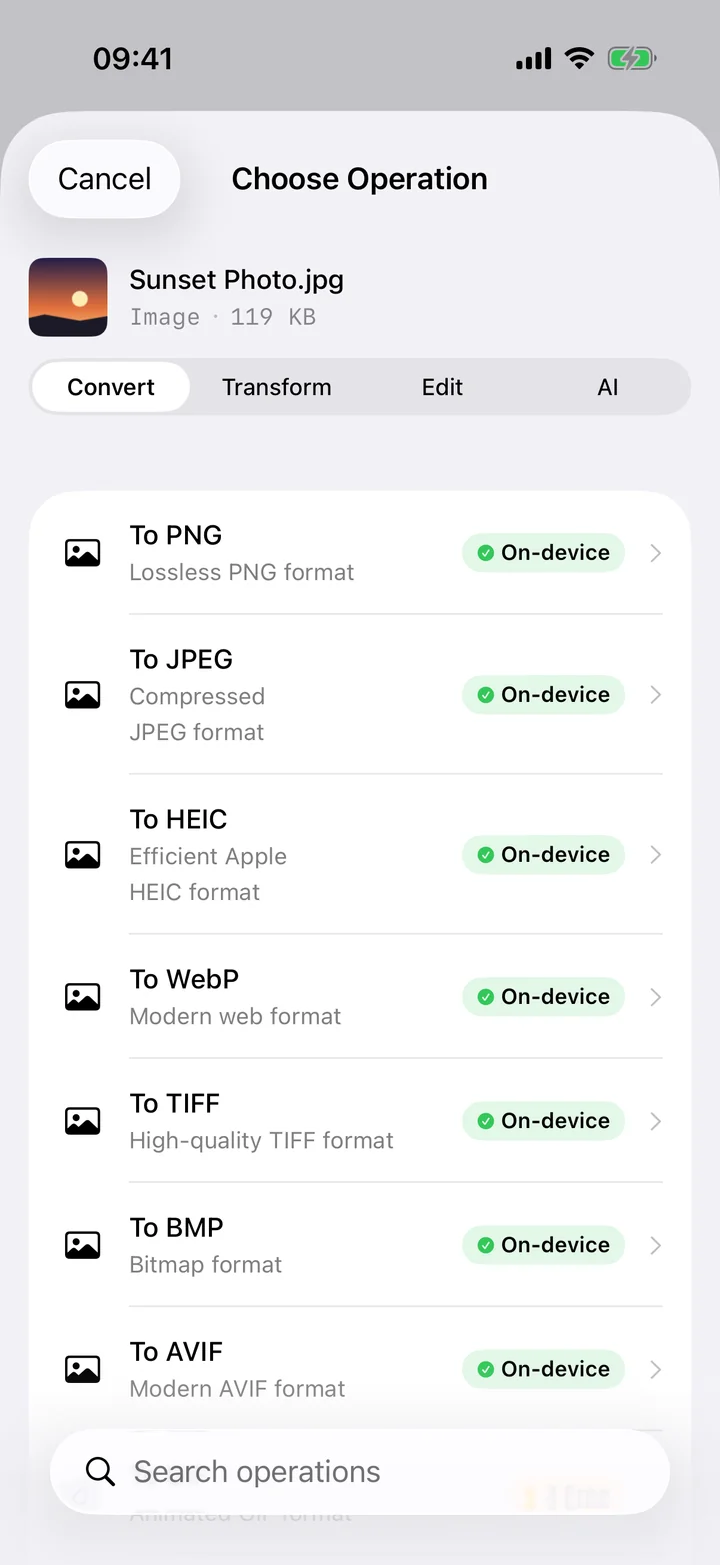
In the app: Convert → To PDF.
Why convert Excel to PDF?
PDF freezes a spreadsheet's numbers and layout in place, so it can be reviewed, printed or archived without anyone accidentally changing a formula. It is the right format any time the spreadsheet is meant to be read, not recalculated.
Is it private?
Yes. Unlike web converters that upload your files to a server, Filemorph converts every file locally using Apple's frameworks. Nothing leaves your device, and it works with no internet connection. This operation is part of Filemorph Pro ($29.99/year, 7-day free trial on monthly and annual plans).