ODT files come out of LibreOffice, OpenOffice and a handful of other open-source suites, and while Word and Pages can sometimes open them, plenty of viewers and upload forms cannot. A PDF removes the guesswork, opening the same way in every browser, phone and desktop.
Filemorph renders the ODT with WebKit, Apple's browser engine, to reproduce text, tables and images from the original document. Complex layouts, macros and embedded fonts may differ from how the document looks in LibreOffice itself, so review anything with heavy custom formatting before treating the PDF as final.
How to convert ODT to PDF on iPhone
Pro
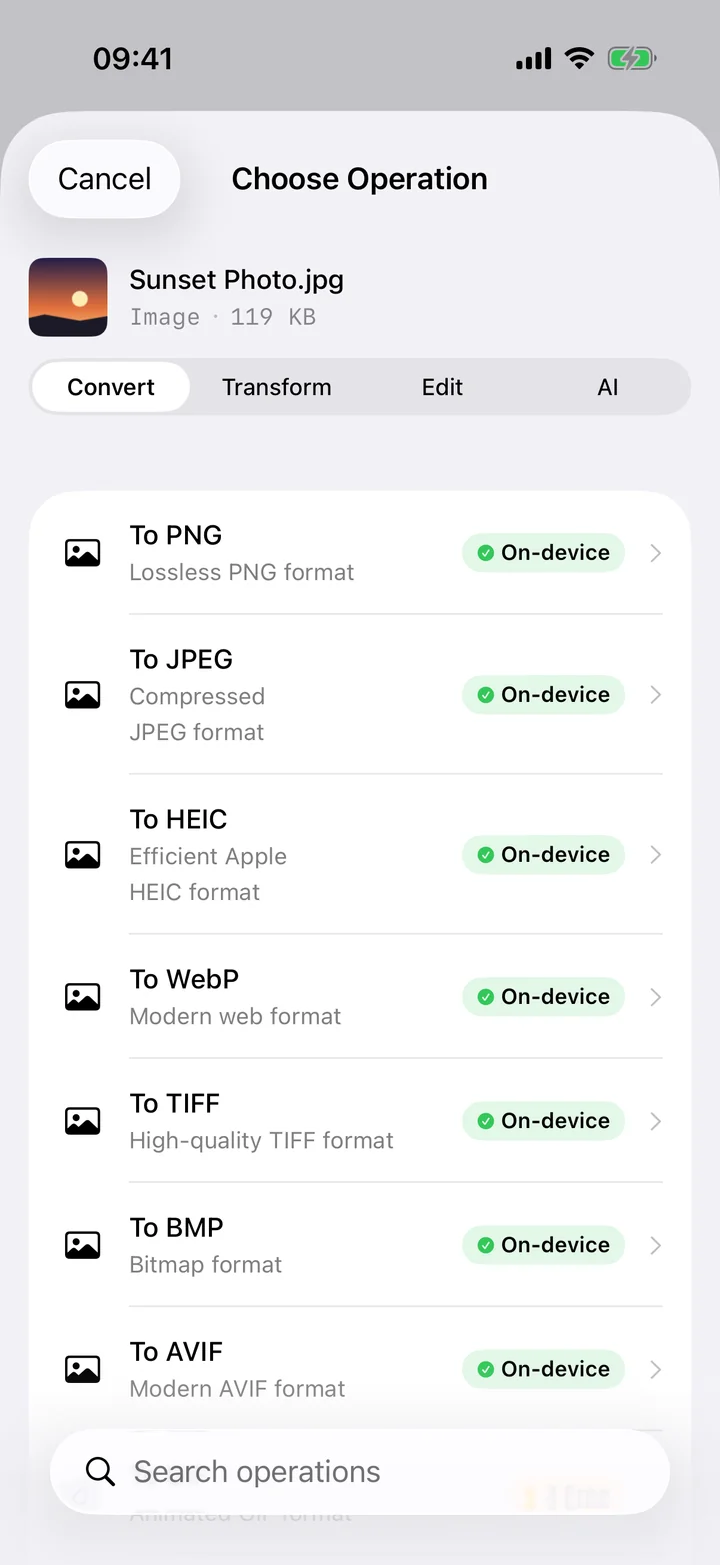
- Add your ODT file. Open Filemorph and pick the ODT file from Files or the Share sheet.
- Choose PDF. Tap Convert and choose PDF as the output format.
- Save or share. Tap Convert. The PDF saves locally, ready to send to anyone.
In the app: Convert → To PDF.
Why convert ODT to PDF?
PDF opens reliably everywhere, while ODT support varies from one app to the next. Converting an ODT document to PDF is the safer choice any time it is headed to someone whose software you cannot predict.
Is it private?
Yes. Unlike web converters that upload your files to a server, Filemorph converts every file locally using Apple's frameworks. Nothing leaves your device, and it works with no internet connection. This operation is part of Filemorph Pro ($29.99/year, 7-day free trial on monthly and annual plans).