Moving a Word document's content into Obsidian, Bear or any plain-text notes app usually means retyping it, unless something converts the file's structure into Markdown first. Filemorph reads a DOCX and rebuilds its headings, lists and paragraphs as Markdown, ready to drop into a notes vault.
Filemorph reads the DOCX's paragraph and character styles directly and maps Word's heading levels to Markdown headings, bulleted and numbered lists to Markdown list syntax, and bold or italic runs to Markdown emphasis. Tables and complex layouts come through as best-effort plain text, since Markdown itself has limited table support compared to Word.
How to convert DOCX to Markdown on iPhone
Pro
- Add your Word file. Open Filemorph and pick the DOCX file from Files or the Share sheet.
- Choose Markdown. Tap Convert and choose Markdown as the output format.
- Save or share. Tap Convert. The Markdown file saves locally — open it in Obsidian, Bear or any text editor.
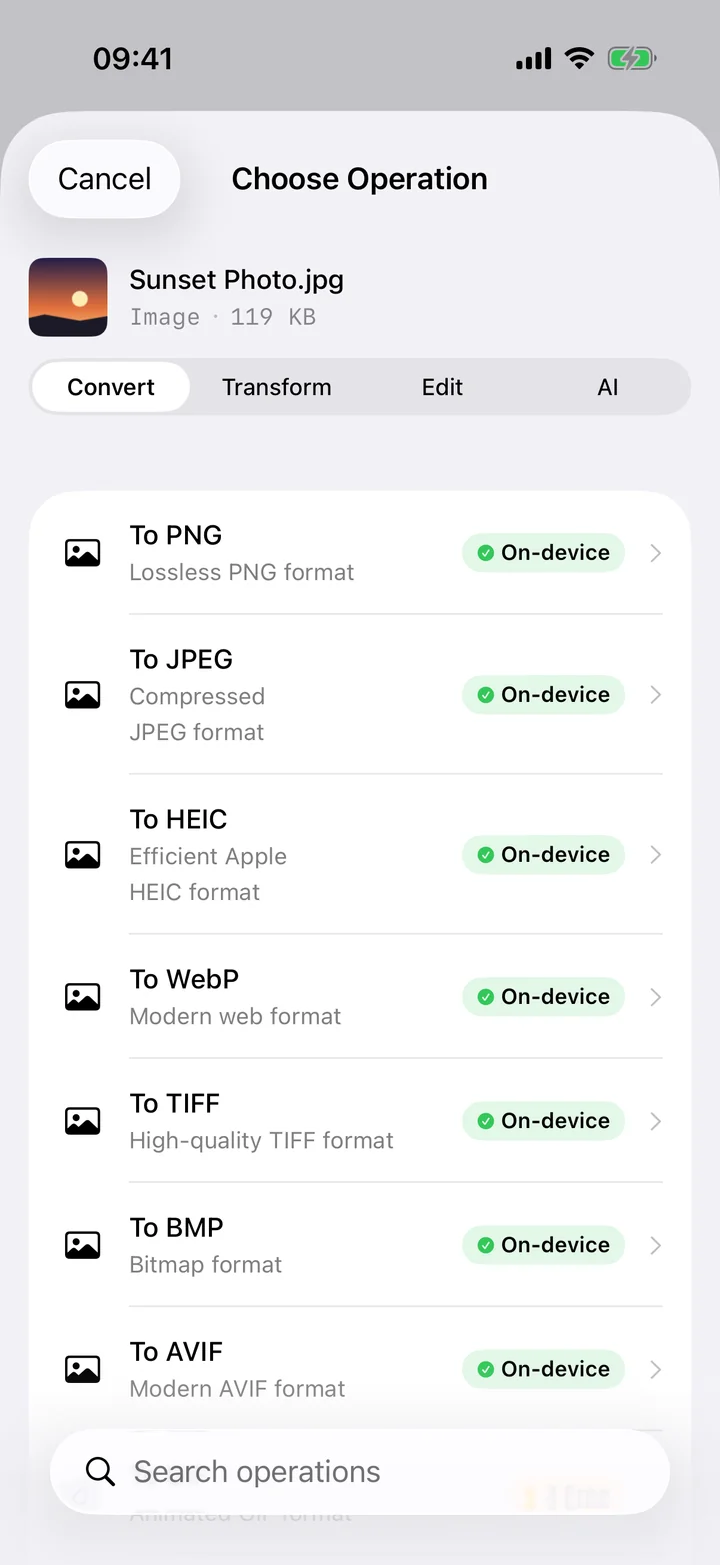
In the app: Convert → To Markdown.
Why convert DOCX to Markdown?
Markdown is lighter, more portable and easier to search across a notes vault than a DOCX file, and most notes apps read it natively. Converting a Word document into Markdown is the fastest way to fold its content into a note-taking workflow without retyping anything.
Is it private?
Yes. Unlike web converters that upload your files to a server, Filemorph converts every file locally using Apple's frameworks. Nothing leaves your device, and it works with no internet connection. This operation is part of Filemorph Pro ($29.99/year, 7-day free trial on monthly and annual plans).