OpenEXR (.exr) stores high dynamic range image data used by 3D renderers, VFX pipelines and compositing tools — far more brightness range than a normal screen or standard image format can show. That makes it excellent for rendering pipelines and useless for just looking at the result on your phone.
Filemorph tone-maps the EXR's HDR data down to standard dynamic range and exports it as a normal PNG, using ImageIO's HDR handling to compress the extended brightness range into something a normal display can show without losing the overall look of the render.
How to convert EXR to PNG on iPhone
Free
- Add your file. Open Filemorph and pick the EXR from Files or the Share sheet.
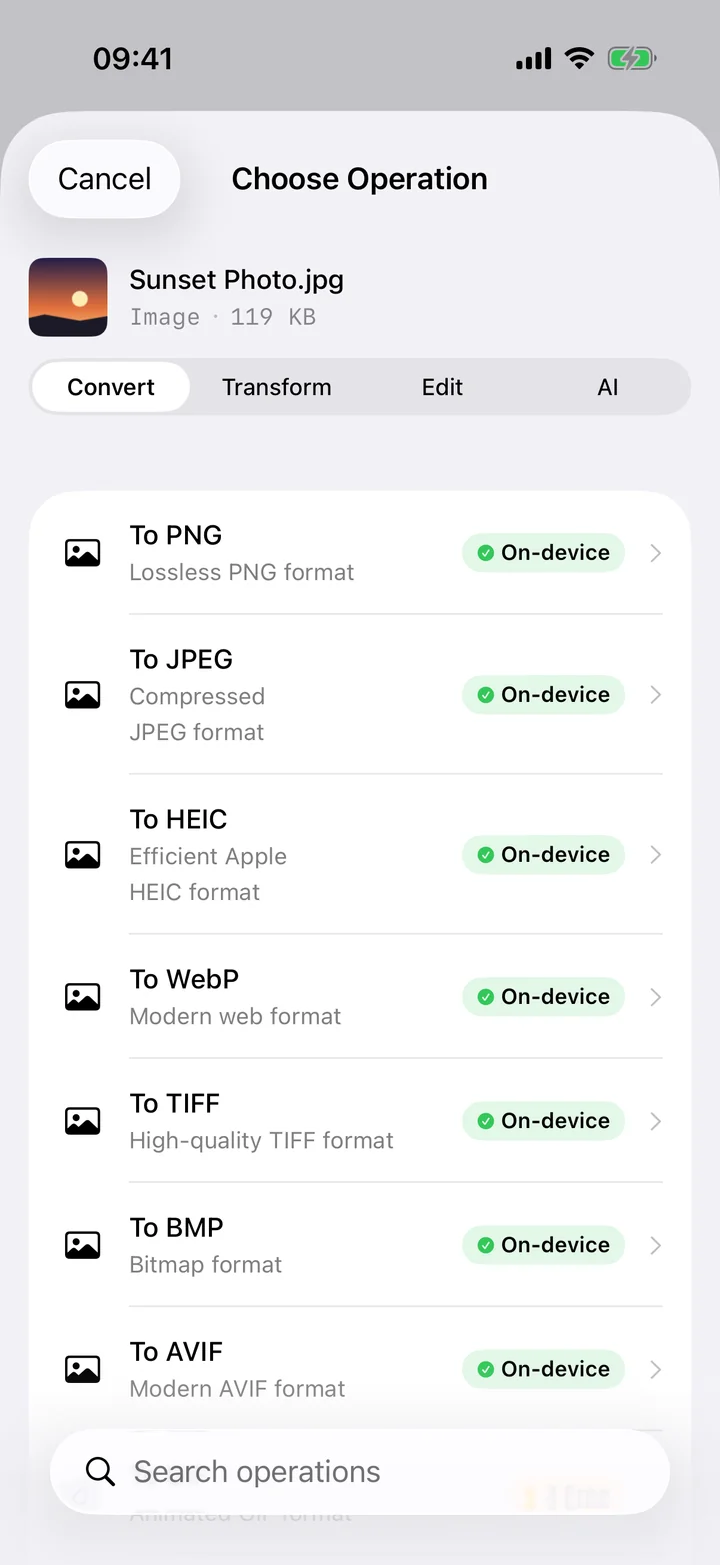
- Choose To PNG. Tap Convert and choose To PNG as the output format.
- Save or share. Tap Convert. The PNG is saved locally — share it, save to Files or AirDrop it.
In the app: Convert → To PNG.
Why convert EXR to PNG?
PNG opens in any image viewer, on any device, without special HDR handling — exactly what you need to quickly check a render or share a frame. Keep the EXR as your working file if the image is headed back into a compositing pipeline.
Is it private?
Yes. Unlike web converters that upload your files to a server, Filemorph converts every file locally using Apple's frameworks. Nothing leaves your device, and it works with no internet connection. This conversion is in the free tier.