A spreadsheet is a fine place to collect data by hand, but most scripts, APIs and automations expect JSON, not a workbook. Filemorph reads the first sheet's rows and writes them out as a JSON array, using the header row as each object's field names.
Filemorph converts each row after the header into one JSON object, with cell values carried over as text so the output is predictable regardless of how a cell was formatted in Excel. Only the first sheet in the workbook converts — for a different sheet, reorder it to the front, or save that sheet as its own file, before converting.
How to convert Excel to JSON on iPhone
Pro
- Add your spreadsheet. Open Filemorph and pick the XLS or XLSX file from Files or the Share sheet.
- Choose JSON. Tap Convert and choose JSON as the output format.
- Save or share. Tap Convert. The JSON file saves locally, ready to use in a script or API.
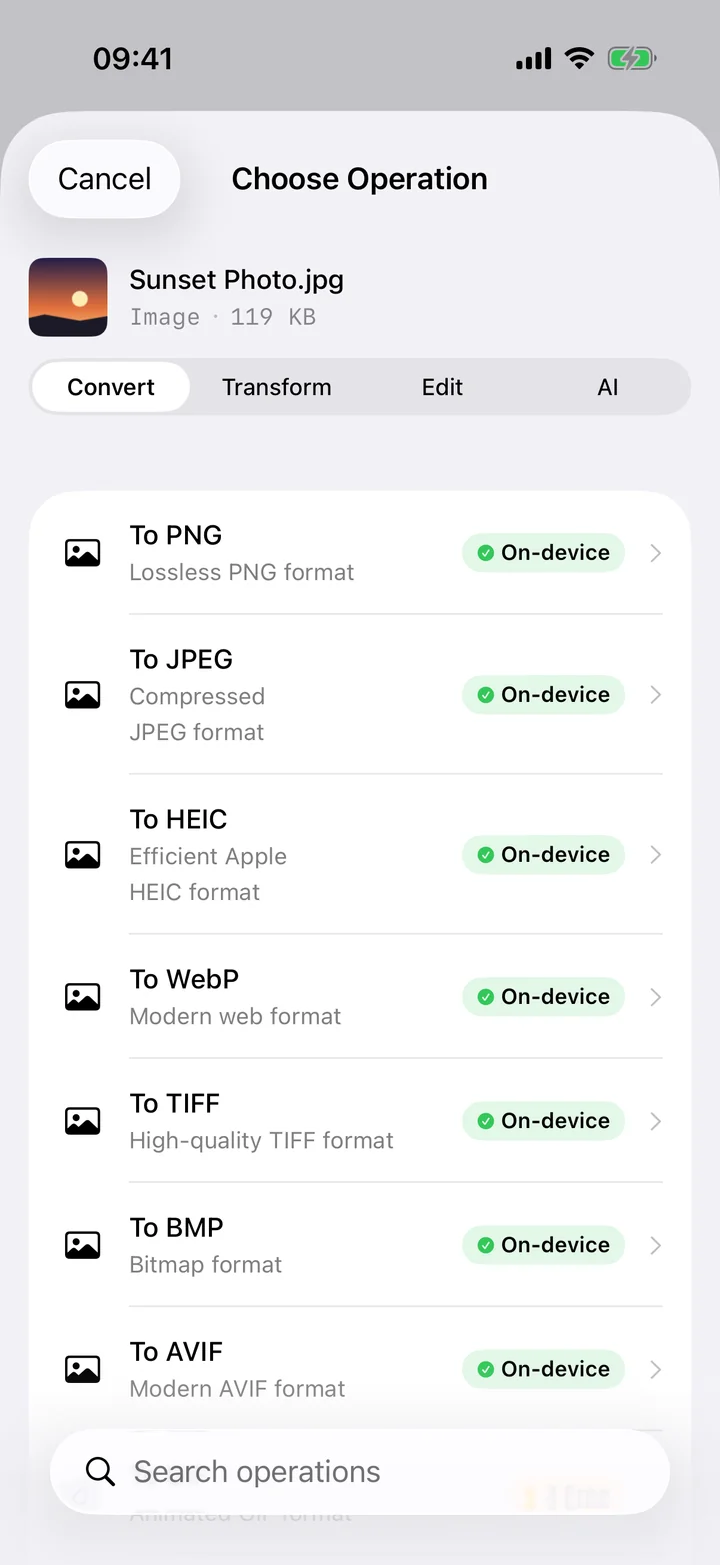
In the app: Convert → To JSON.
Why convert Excel to JSON?
JSON is the format code actually parses, while a spreadsheet is built for people to read and edit by hand. Exporting a workbook's rows as JSON turns a manually maintained sheet into data a script, API or automation can use directly.
Is it private?
Yes. Unlike web converters that upload your files to a server, Filemorph converts every file locally using Apple's frameworks. Nothing leaves your device, and it works with no internet connection. This operation is part of Filemorph Pro ($29.99/year, 7-day free trial on monthly and annual plans).