A CSV export works fine in a spreadsheet, but scripts, APIs and most modern tooling expect JSON. Filemorph reads a CSV file and writes out a JSON array where each row becomes an object, keyed by the CSV's header row.
Filemorph parses the CSV with standard quoting rules, so fields containing commas or line breaks inside quotes are handled correctly, and writes the result as valid, readable JSON with the header row used as each object's field names.
How to convert CSV to JSON on iPhone
Pro
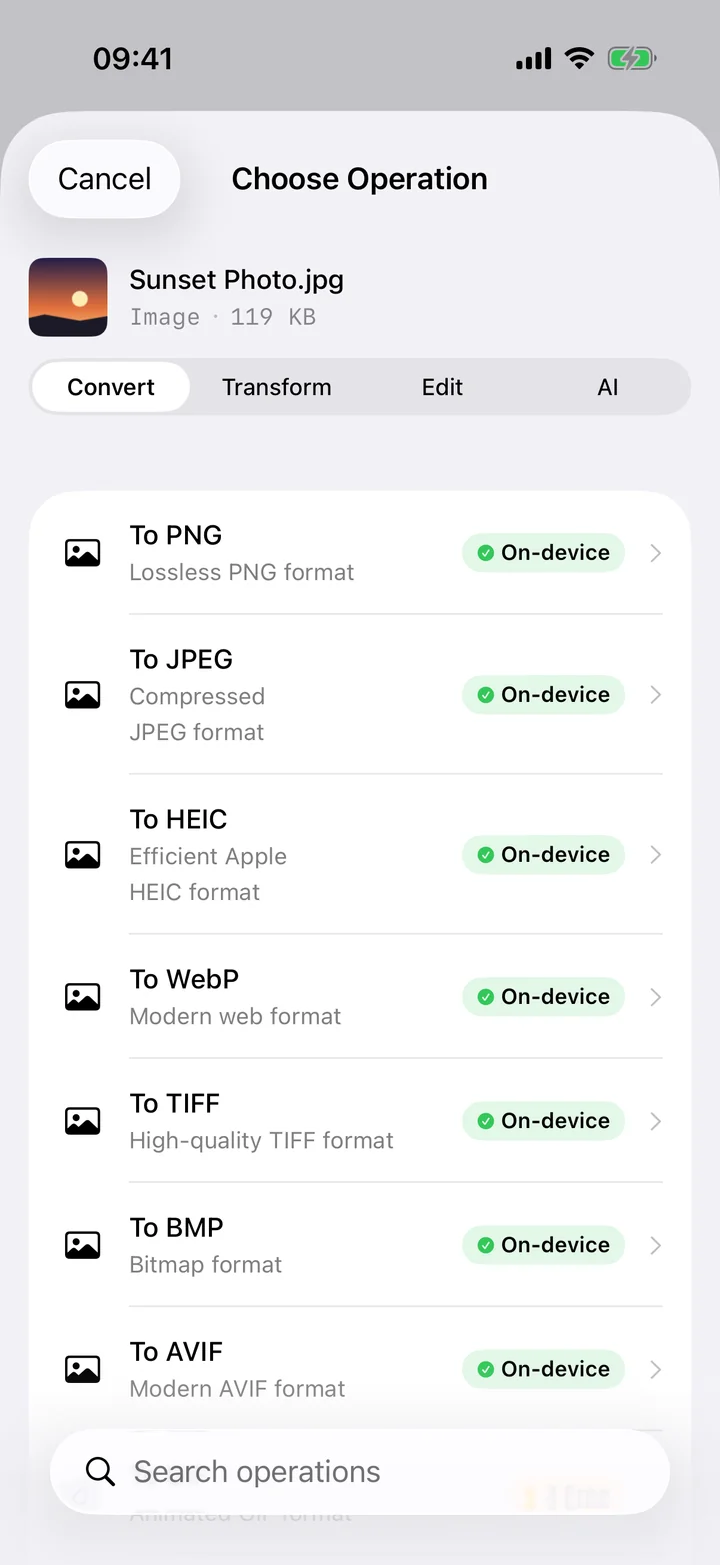
- Add your CSV file. Open Filemorph and pick the .csv file from Files or the Share sheet.
- Choose JSON. Tap Convert and choose JSON as the output format.
- Save or share. Tap Convert. The JSON file saves locally, ready to use in a script or import elsewhere.
In the app: Convert → CSV → JSON.
Why convert CSV to JSON?
JSON is the format most scripts, APIs and web tools expect, while CSV is built for spreadsheets. Converting once turns a flat export into structured data you can loop over, query or feed into another program without writing a parser yourself.
Is it private?
Yes. Unlike web converters that upload your files to a server, Filemorph converts every file locally using Apple's frameworks. Nothing leaves your device, and it works with no internet connection. This operation is part of Filemorph Pro ($29.99/year, 7-day free trial on monthly and annual plans).