Image-heavy websites load faster when photos ship as WebP instead of JPG, and plenty of CMS platforms, ad networks and upload forms now ask for it outright. If you shoot on an iPhone and need a batch of product or blog photos ready for the web, converting on the device that took them saves a round trip through a laptop.
Filemorph re-encodes the JPG using Apple's ImageIO WebP encoder, typically landing 25 to 35% smaller than the source JPG at a comparable visual quality. The conversion is lossy, matching how WebP is normally used for photos on the web, and the output keeps the original color profile and orientation.
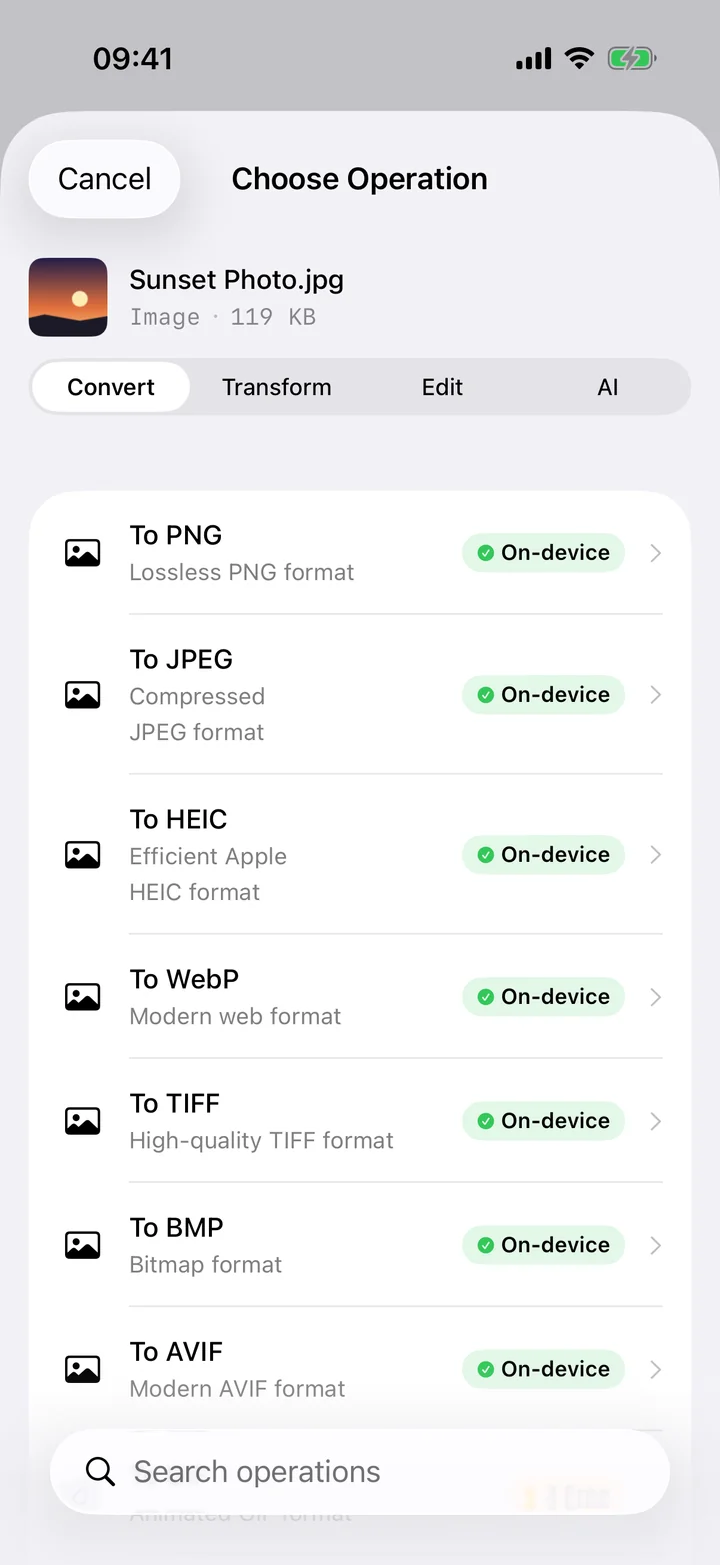
How to convert JPG to WebP on iPhone
Free
- Add your image. Open Filemorph and pick the JPG from Photos, Files or the Share sheet.
- Choose To WebP. Tap Convert and choose To WebP as the output format.
- Save or share. Tap Convert. The WebP is saved locally — share it, save to Files or AirDrop it.
In the app: Convert → To WebP.
Why convert JPG to WebP?
WebP was built for the web: it compresses photos smaller than JPG at the same visual quality, which means faster page loads and lower bandwidth bills. Use it for website images, product photos and anything you are uploading to a modern CMS; keep JPG for platforms that still reject WebP, like some email clients.
Is it private?
Yes. Unlike web converters that upload your files to a server, Filemorph converts every file locally using Apple's frameworks. Nothing leaves your device, and it works with no internet connection. This conversion is in the free tier.