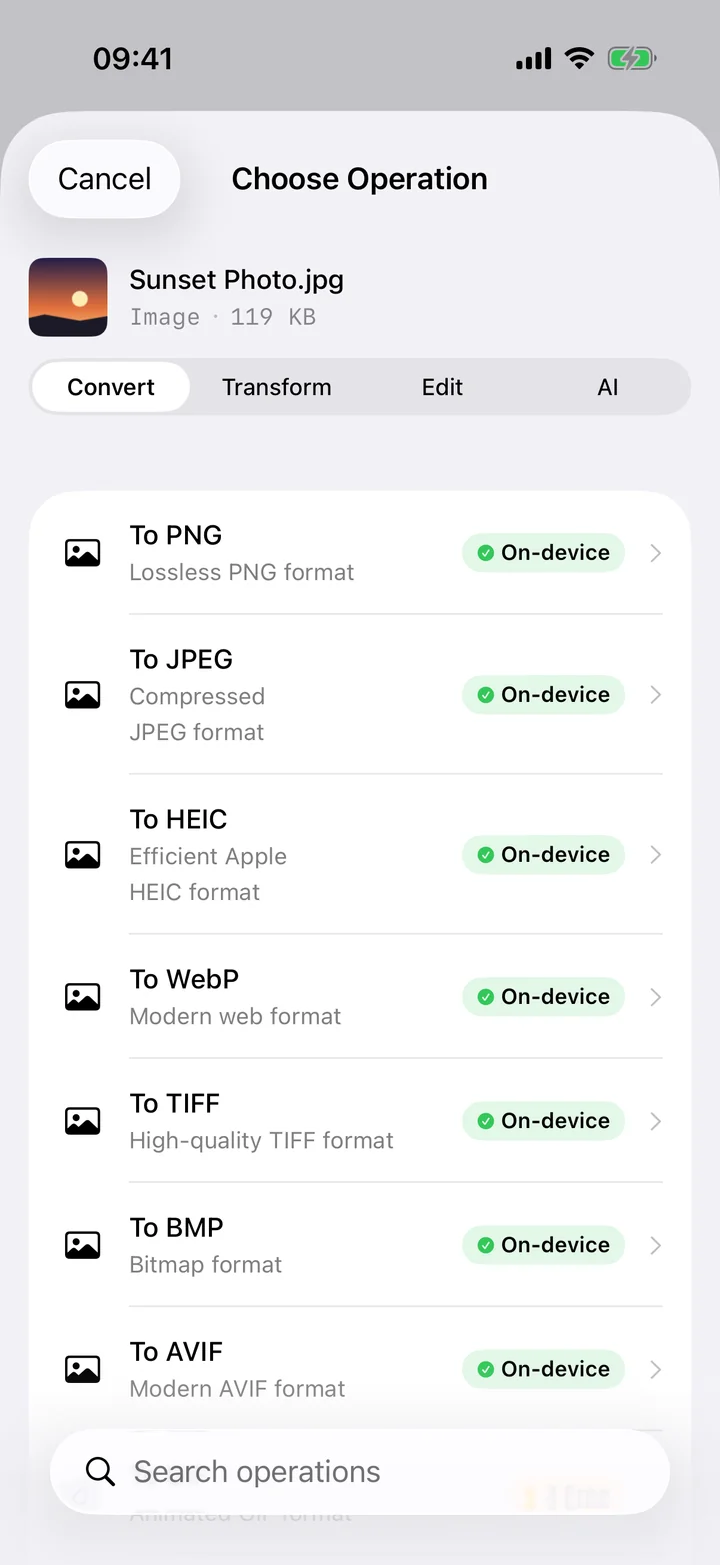
iOS ringtones have to be M4R files under 40 seconds — a plain M4A song or voice memo will not show up in the Ringtones list no matter how it is renamed. Filemorph handles both parts: picking the section of the track you want and writing it out in the format iOS expects.
Pick the start point and Filemorph exports up to 40 seconds from there, encoded as M4R. That covers a chorus from a song, a favorite line from a voice memo, or any other clip you want to hear every time your phone rings.
How to make a ringtone from M4A on iPhone
Pro
- Add your M4A file. Open Filemorph and pick the song or voice memo from Files or the Share sheet.
- Set the ringtone clip. Tap Ringtone and choose up to 40 seconds of the track.
- Save or install. Tap Convert, then install the M4R using GarageBand on iPhone or Finder on a Mac.
In the app: Ringtone.
Why make a ringtone from a favorite track?
The stock ringtones are the same handful of sounds everyone else's phone makes too. Building a ringtone from a song you actually like, or a voice memo that means something, is a small piece of personalization that Apple's own tools make more difficult than it needs to be.
Prefer the Shortcuts route
Filemorph also has a ready-made Shortcuts recipe for this — see the Make a Ringtone shortcut for a version that runs from the share sheet without opening the app first.
Is it private?
Yes. Unlike web converters that upload your files to a server, Filemorph converts every file locally using Apple's frameworks. Nothing leaves your device, and it works with no internet connection. This operation is part of Filemorph Pro ($29.99/year, 7-day free trial on monthly and annual plans).