MOV is the container Apple's camera and screen recorder use by default, so a voice recording, a meeting filmed for the audio, or a screen recording with narration usually lands as a MOV. If all you need afterward is the sound, carrying the video around is wasted space.
Filemorph reads the MOV's audio track and, since iPhone recordings are already AAC, copies it straight into an M4A container without decoding and re-encoding it. The result is a lightweight audio file ready for a transcription app, a notes app or just AirPlaying to a speaker.
How to extract audio from a MOV on iPhone
Pro
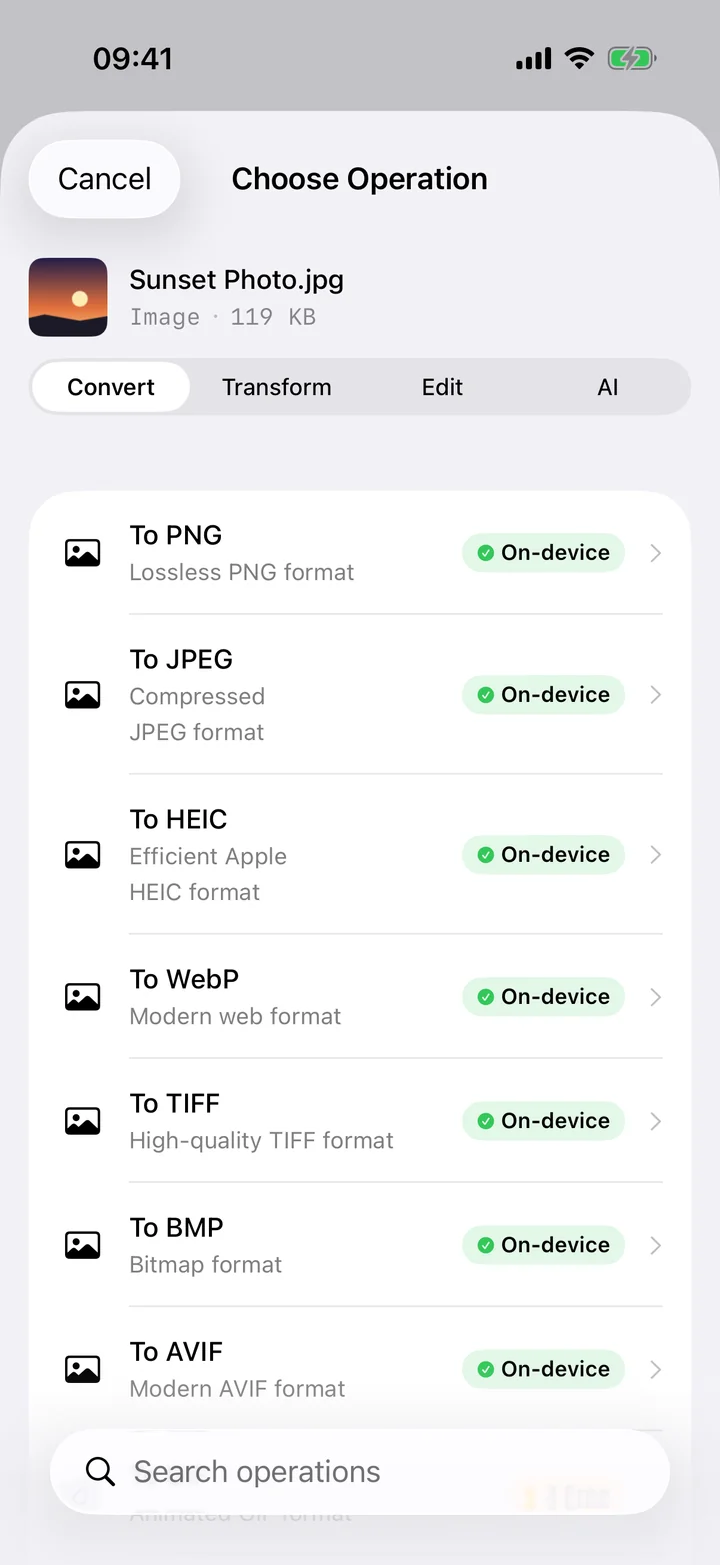
- Add your recording. Open Filemorph and pick the MOV from Photos, Files or the Share sheet.
- Extract the audio. Tap Extract Audio. Filemorph pulls the audio track out on its own.
- Save or share. Tap Convert. The M4A saves locally, ready for a transcription app or notes.
In the app: Extract Audio.
Why extract audio from a MOV recording?
A video you filmed for the audio still carries every frame of picture, which makes the file bigger than it needs to be and gets in the way of transcription tools built for audio, not video. Pulling the audio out once leaves you with a file purpose-built for listening back or feeding into a speech-to-text tool.
Is it private?
Yes. Unlike web converters that upload your files to a server, Filemorph converts every file locally using Apple's frameworks. Nothing leaves your device, and it works with no internet connection. This operation is part of Filemorph Pro ($29.99/year, 7-day free trial on monthly and annual plans).