Extracting audio from a video usually means opening a desktop editor just to throw the picture away. Filemorph does the extraction directly on your iPhone: pick the MP4, tap Extract Audio, and the audio track comes out as a standalone M4A file you can play, share or drop into a notes app.
When the video's audio track is already AAC — true for the overwhelming majority of MP4s, including anything recorded on an iPhone — Filemorph copies the compressed audio data straight into the M4A container instead of decoding and re-encoding it, so the extracted track matches the source exactly and the export finishes in seconds even for a long recording.
How to extract audio from an MP4 on iPhone
Pro
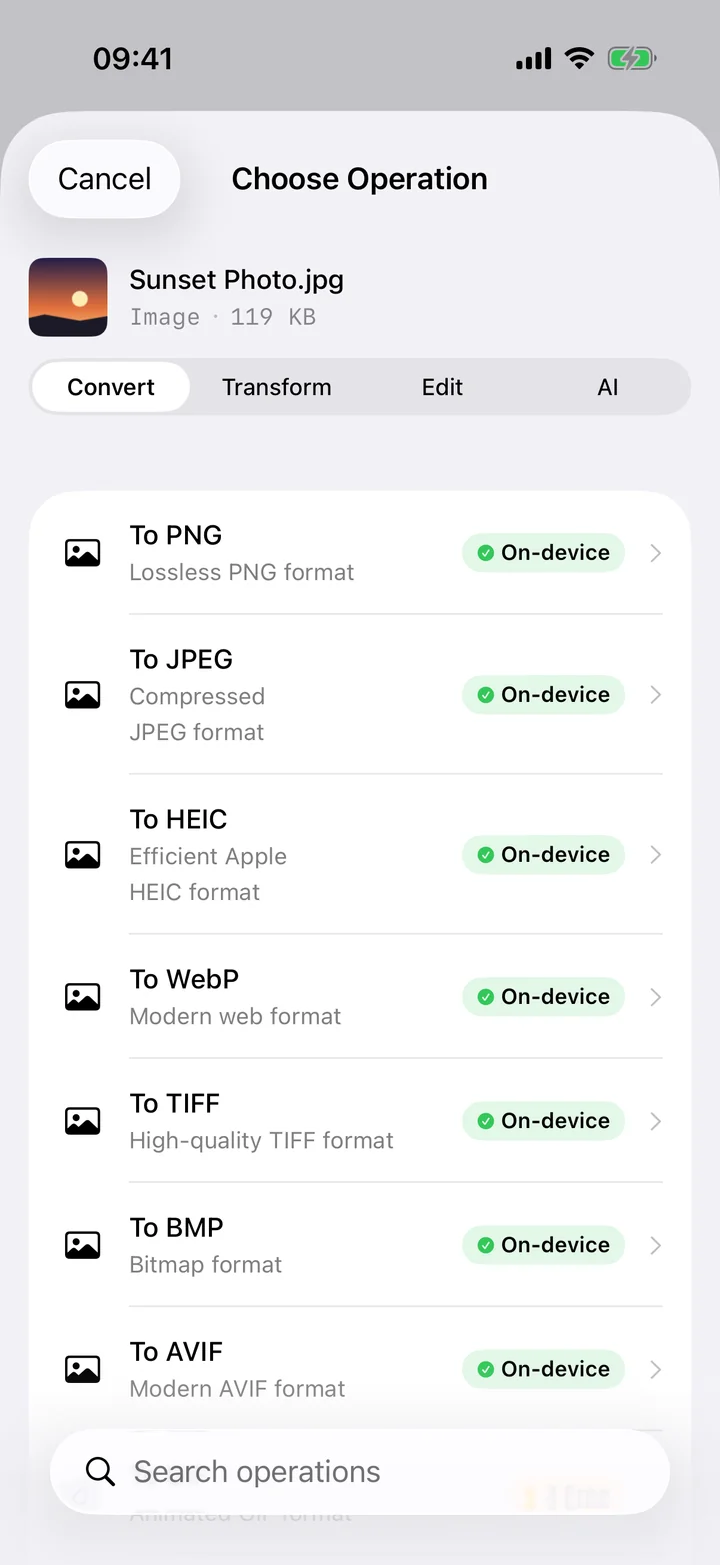
- Add your video. Open Filemorph and pick the MP4 from Photos, Files or the Share sheet.
- Extract the audio. Tap Extract Audio. Filemorph pulls the audio track out on its own.
- Save or share. Tap Convert. The M4A saves locally — share it, save to Files or send it right away.
In the app: Extract Audio.
Why pull audio out of a video?
A video file carries picture data you may not need at all once you only care about the sound — it takes up more space, and most audio players and transcription tools want a plain audio file, not a video. Extracting the track once gives you a smaller file that opens in any audio app instead of a video player.
Is it private?
Yes. Unlike web converters that upload your files to a server, Filemorph converts every file locally using Apple's frameworks. Nothing leaves your device, and it works with no internet connection. This operation is part of Filemorph Pro ($29.99/year, 7-day free trial on monthly and annual plans).