M4A (AAC) is the format Apple Music, Voice Memos and most iOS recording tools already use, so folding an older MP3 collection into M4A keeps a whole library in one consistent format instead of a mix of two.
This conversion decodes the MP3 and re-encodes it as AAC using Apple's AVFoundation. Because MP3 is already a lossy format, re-encoding it to another lossy format does not restore anything the MP3 lost, and it adds a small amount of additional generation loss on top. For a track you still have in a lossless source, converting from that source instead gives a cleaner result.
How to convert MP3 to M4A on iPhone
Pro
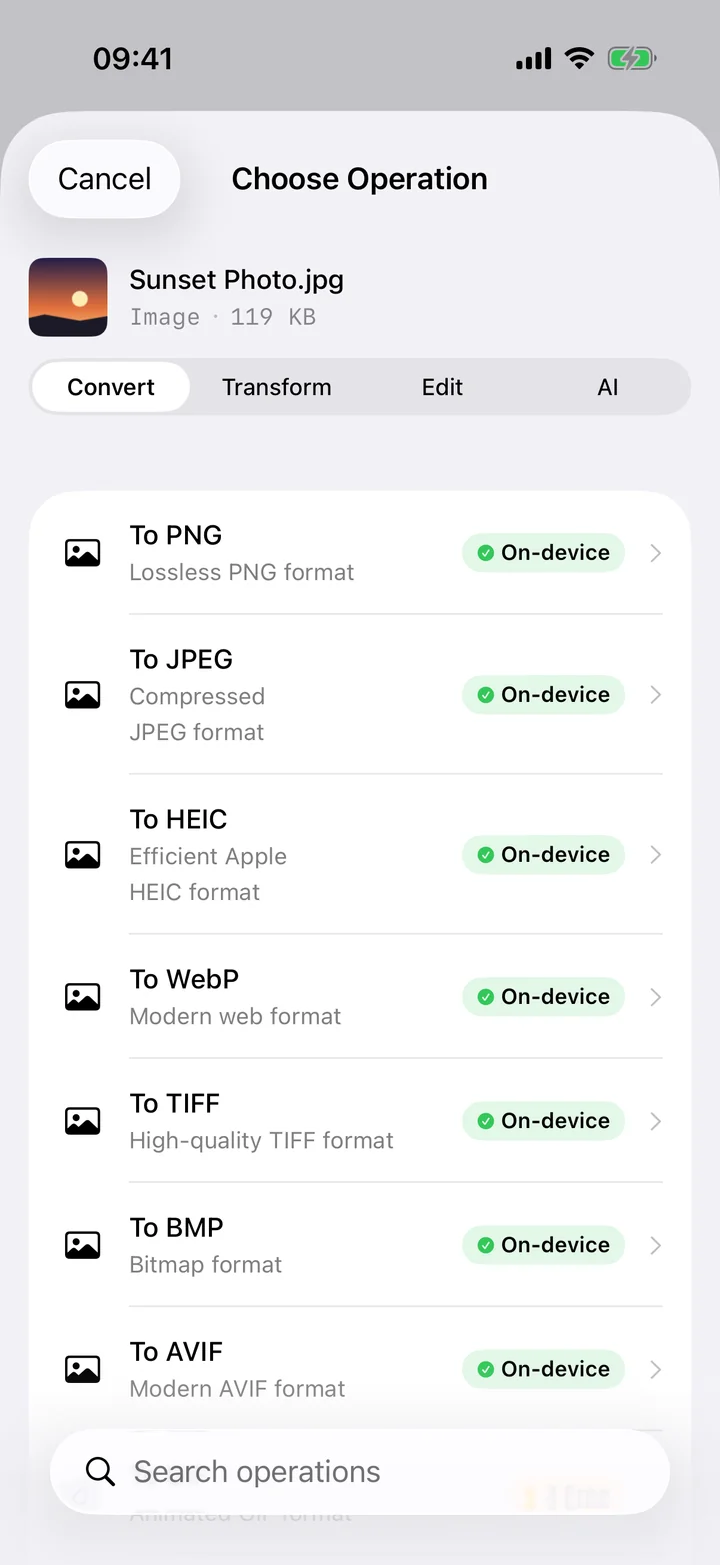
- Add your MP3 file. Open Filemorph and pick the MP3 from Files or the Share sheet.
- Transcode. Tap Transcode and set Output Format to M4A. The same picker offers MP3 at 128 to 320 kbps, WAV and AIFF.
- Save or share. Tap Convert. The M4A saves locally, matching the format of the rest of your library.
In the app: Transcode (Output Format: M4A).
Why convert MP3 to M4A?
A library split between MP3 and AAC files behaves inconsistently in some apps and syncs oddly across devices. Standardizing older MP3s to M4A brings them in line with everything already recorded or purchased in Apple's format.
Is it private?
Yes. Unlike web converters that upload your files to a server, Filemorph converts every file locally using Apple's frameworks. Nothing leaves your device, and it works with no internet connection. This operation is part of Filemorph Pro ($29.99/year, 7-day free trial on monthly and annual plans).